
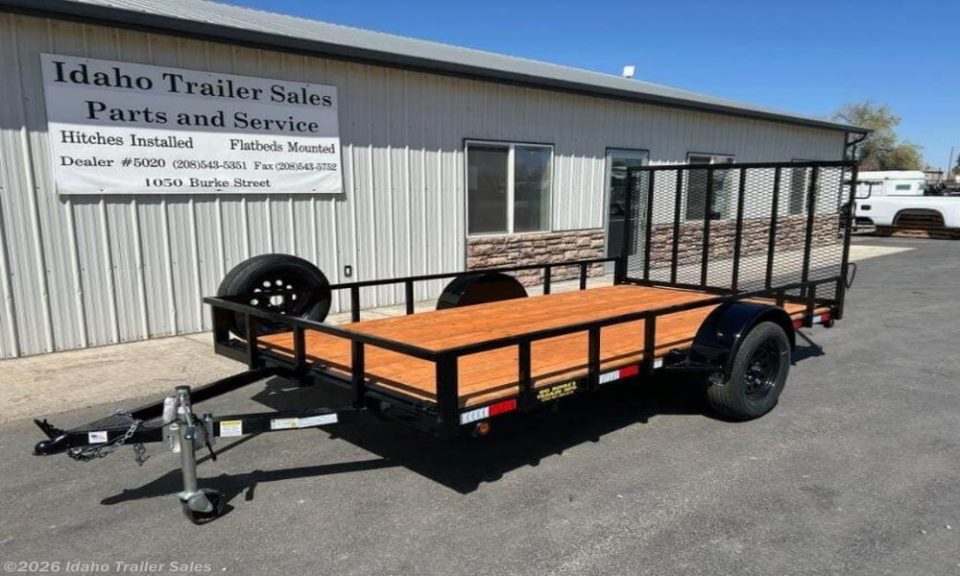
Used trailer listings on Facebook Marketplace and Craigslist look the same from your phone. Decent photos, a believable price, a seller who says everything works. The trailer that shows up to the meetup parking lot is sometimes exactly what was advertised. Sometimes it’s a rolling repair bill with a fresh coat of paint hiding the rust. Grizzly Trailer Sales has taken in plenty of used trailers as trades over the years in Rupert and Montpelier, and the patterns are consistent. The good ones reveal themselves in the first 15 minutes if you know where to look. The bad ones do too, if you slow down and check the right things.
Start With the Frame
The frame is the part you can’t fix economically. Tires get replaced. Lights get rewired. A bent or cracked frame turns a $4,000 used trailer into scrap.
Walk around the trailer and look at the main rails, the crossmembers, and especially the welds at the tongue, the axle mounts, and the rear corners. What you’re looking for:
- Cracks at weld joints, particularly where the tongue meets the main frame
- Bowing or sagging in the main rails when viewed end-on
- Rust that has progressed past surface oxidation and is actively flaking or pitting the steel
- Evidence of past welding repairs, especially uneven beads or fresh paint covering older work
- Bent tongue jacks or coupler mounts suggesting hard impacts
Surface rust on a 10-year-old Idaho trailer is normal. Structural rust, where you can flake metal off with a screwdriver or push a thumb into a soft spot, is a deal-breaker. The salt used on Idaho highways in winter accelerates corrosion on trailers that get used year-round, particularly along the wheel wells and the bottom of frame rails.
Check the Axles and Suspension
Axles and suspension components are repairable but expensive. A pair of new torsion axles installed can run $1,500 to $2,500 depending on capacity. Worn-out bearings can lock up on the highway and ruin a spindle.
Grab the top of each tire and rock it side to side and top to bottom. Significant play often means worn bearings. Spin each wheel and listen for grinding, growling, or rough rotation. Look at the back side of each hub for grease leaks, which indicate failing seals.
Examine the suspension itself. Leaf springs should be uniform with no broken or cracked leaves and equalizer bushings that aren’t worn through. Torsion axles should sit at the same height on each side. A trailer leaning noticeably to one side empty has a problem somewhere in the suspension or frame.
Brakes Tell You How the Trailer Was Maintained
Most utility, dump, and equipment trailers over 1,500 pounds in Idaho require brakes on at least one axle under Idaho Code § 49-927. Working brakes are not optional, and replacing all four brake assemblies on a tandem axle trailer can run several hundred dollars in parts alone.
Pull a wheel if the seller will allow it, or at least look through the wheel openings at the brake drums and shoes. Heavily scored drums, broken springs, or backing plates with corrosion eaten through suggest the brakes have been neglected for years.
Test the brake controller connection. With the trailer hooked up to a vehicle with a working controller, manually activate the brakes using the controller’s slide bar. You should feel resistance. No resistance means broken wiring, seized actuators, or failed magnets.
The Deck and Sides
Wood decks rot from below. The top surface can look passable while the underside has turned into mulch. Lie down and look at the underside of the deck, or push hard on suspect boards from above. Soft spots, exposed bolt heads that have pulled through, and visible daylight from below all indicate deck replacement is coming.
Steel decks have their own issues. Look for cracks at weld points where the deck meets the frame, deep pitting that has thinned the plate, and previous repairs that may not be load-rated.
For enclosed cargo trailers, walk inside and look for water staining on the ceiling and at the corners where the walls meet the roof. Roof leaks are common on trailers stored outside without maintenance, and the resulting interior damage often costs more to fix than the trailer is worth.
Lights, Wiring, and the Things People Forget
A simple light check catches issues that cause roadside stops and citations. With the trailer plugged into a vehicle, run through:
- Running lights on both sides
- Brake lights left and right
- Turn signals left and right
- License plate light
- Side marker lights and reflectors
Wiring repaired with wire nuts and electrical tape on a trailer that lives outside in southern Idaho weather is going to fail again. Properly sealed butt connectors or soldered joints with heat shrink are signs of a seller who actually maintained the trailer.
Check the breakaway switch and the battery that powers it. A dead breakaway battery is a safety problem and an easy thing for sellers to overlook.
Tires Are Older Than They Look
Trailer tires fail by age more than tread. Idaho sun and seasonal temperature swings degrade rubber even on trailers that don’t move much. The DOT code on the sidewall of every tire ends in four digits indicating the week and year of manufacture. A code ending in 1819 means the 18th week of 2019.
Trailer tires older than seven years should be replaced regardless of tread, and many fail before that. Sidewall cracks, dry rot, and uneven wear are all reasons to negotiate or walk away.
Title, Registration, and VIN Verification in Idaho
Idaho requires titles for trailers above a certain weight, and the registration process at the county DMV requires a clean title in the seller’s name. Before money changes hands:
- Verify the VIN on the trailer matches the title exactly
- Confirm the seller’s name on the title matches the person you’re buying from
- Check for lienholder notations that haven’t been released
- Run the VIN through the Idaho Transportation Department or a service like NICB VINCheck to look for theft reports
Trailers with homemade construction may have no VIN at all and require an Idaho VIN inspection through a sheriff’s office or designated inspection station before they can be titled. This adds time and modest cost to the registration process.
When the Used Trailer Math Stops Working
After enough inspections, a pattern emerges. A used trailer that needs new tires, new brakes, deck repair, and wiring work often ends up costing more than a comparable new trailer with a warranty. That’s where buying from a dealer like Grizzly Trailer Sales starts to make sense, even for buyers who set out to save money on a private sale.
Stop by our Rupert lot at 305 W 100 S or our Montpelier lot at 740 N 4th St to see our used trailer inventory in person, all inspected before going on the lot. Call (208) 678-2981 to talk through what you’re looking for, or to get a straight answer about whether a private sale you’re considering is worth the asking price.
